‘Het Paviljoen der Menselijke Driften’ from Guido Belcanto is out now
Anyone who goes by the name ‘Guido Belcanto’ simply has to treat the world to a new collection of melodious songs on a regular basis. “Het Paviljoen der Menselijke Driften” is the eighteenth album in four decades from this pioneer of the ‘levenslied’.
But lo and behold, almost forty years later, Guido, our guide, is still singing that story of Edward, a man who ‘means nothing if nobody cares’. The song opens his new album, which is, more than ever, an ode to real music: the ‘levenslied’, the ‘smartlap’, the tearjerker, the country ballad.
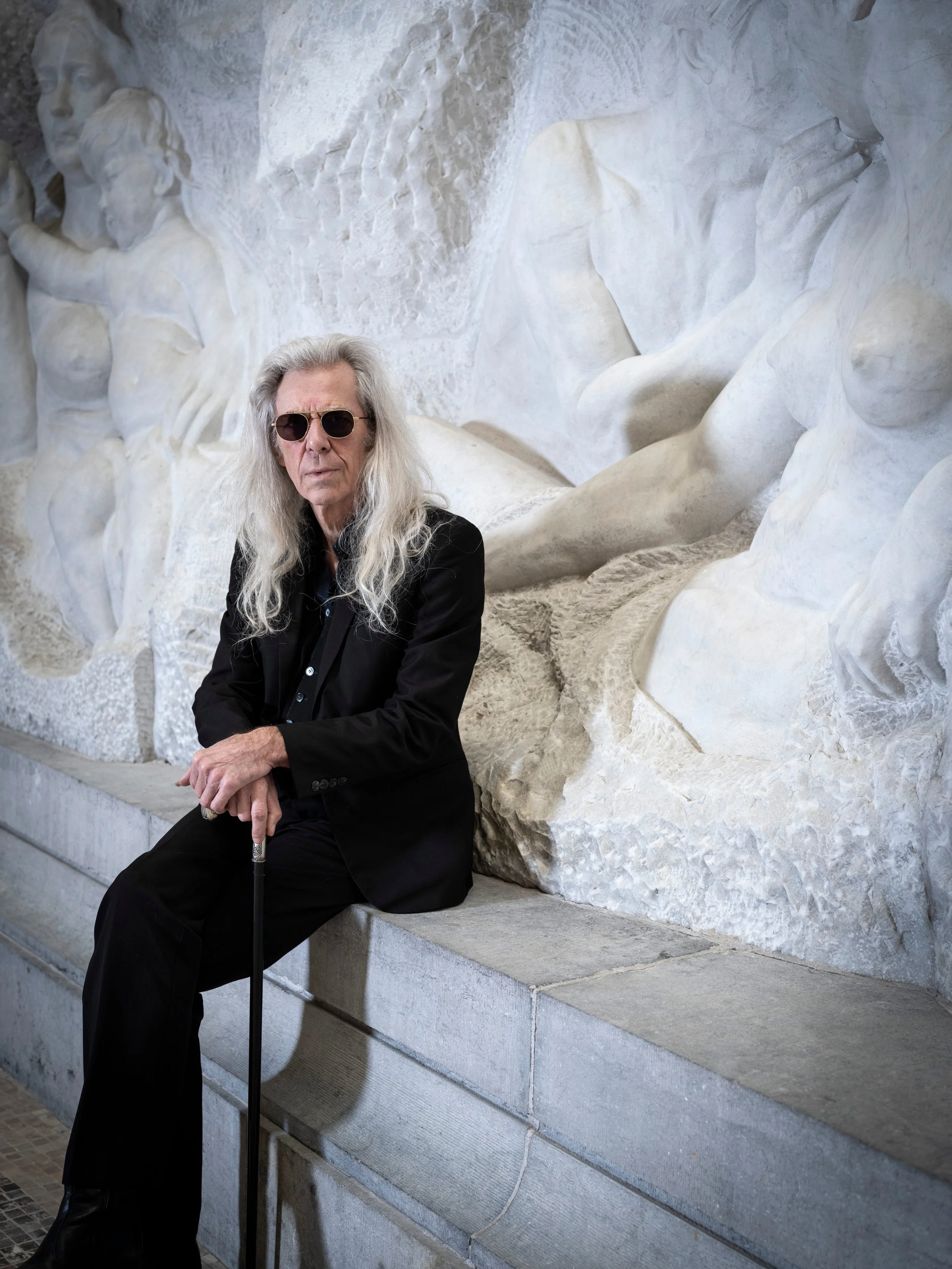
Photo credit: Dieter Bacquaert
The album has its origins in a revelation that Guido experienced when a stroke of good fortune brought him to Brussels’ Jubelpark, to the Carrara marble relief by Jef Lambeaux. In the sensuous gallery of sculptures by that famous sculptor, he saw infatuation and youth, sins and torments, with Little Death at the centre, reigning over earthly existence. And sometimes Guido doesn’t need to think twice: that’s what his album would be called.
The album has its origins in a revelation that Guido experienced when a stroke of good fortune brought him to Brussels’ Jubelpark, to the Carrara marble relief by Jef Lambeaux. In the sensuous gallery of sculptures by that famous sculptor, he saw infatuation and youth, sins and torments, with Little Death at the centre, reigning over earthly existence. And sometimes Guido doesn’t need to think twice: that’s what his album would be called.
Who still remembers Maria Servaes-Bey, the queen of the Dutch ‘levenslied’ who, as ‘De Zangeres Zonder Naam’ (The Singer Without a Name), sang of drunken fathers, white roses and blossoming twigs? In ‘Als ik je zon niet kan wezen’, she makes a posthumous cameo appearance. Further on, we hear Guido paying her even more tribute, with three dramatic covers of the legendary Johnny Hoes, of which ‘En ze lachte’ would be just as at home in the merciless universe of Nick Cave.
Because take note: Belcantoland isn’t just an oasis of happiness. On this album, Guido brings together twelve songs in which dates go wrong, a little sister is never born, and Pearly Spencer sees her beauty fade.
It’s a mix of laughter and tears. ‘Papa hangt in de kelder’ (Dad’s hanging in the cellar), a song that seems dramatic at first glance, still ends with an unexpected smile.
‘Life is a harsh horror’, Guido concludes this album, whilst from his library, loyal friends such as Gerard Reve and Arthur Schopenhauer sway approvingly. ‘Life is a gift from fate’.
You don’t create a song collection like this with anonymous session musicians, but with good people who have lived life to the full. Now that songwriting is being taken over by AI and music is increasingly coming from boxes rather than from playing together, it’s a statement to choose people who still know what a Mellotron, a pedal steel, a harmonium and a Farfisa organ are. There are no real emotions without real instruments.
So, at Studio Bobonne in Ekeren, a lovely group gathered in search of a crisp live sound, because this Belcanto is about to hit the road. What a party! We hear guitars weeping, organs caressing, a small choir soothing, and suddenly a Mexican accordion cutting through the evening.
In this way, the album grows organically towards its muse: the relief in Brussels that so aptly depicts the joys and sorrows of human life. And so Guido Belcanto sings today, too.